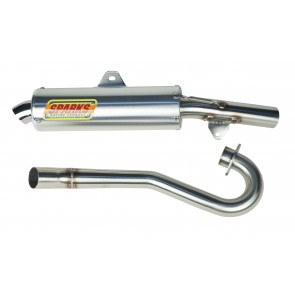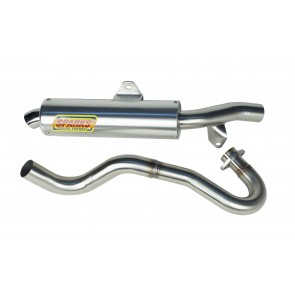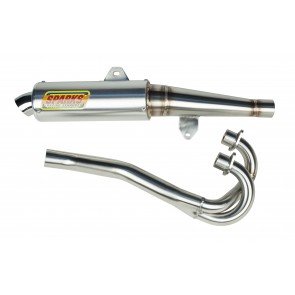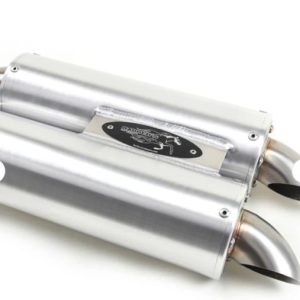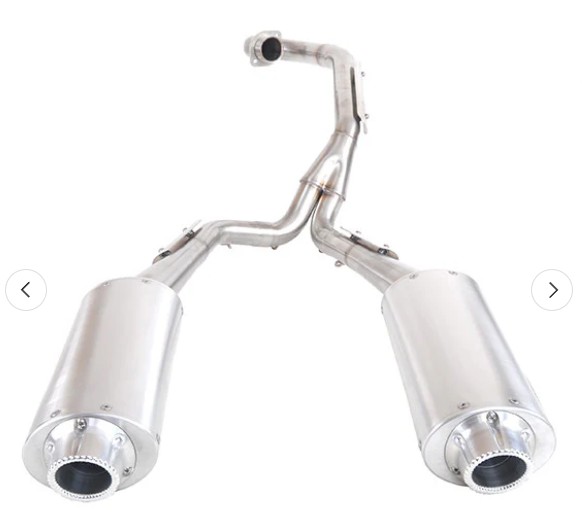
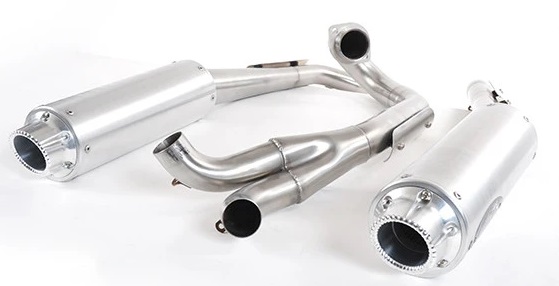
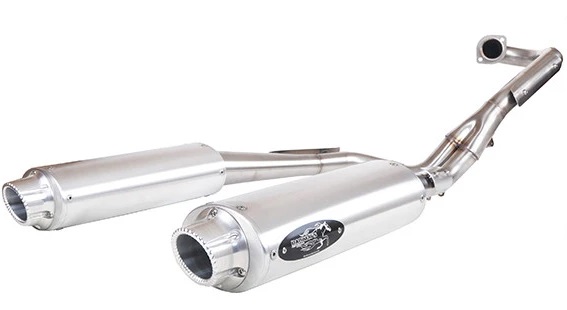
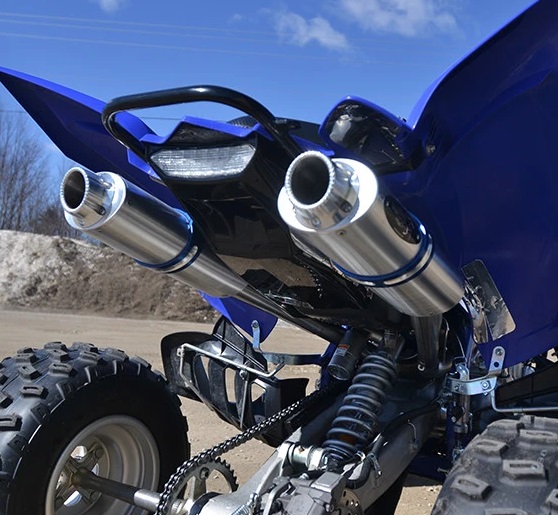
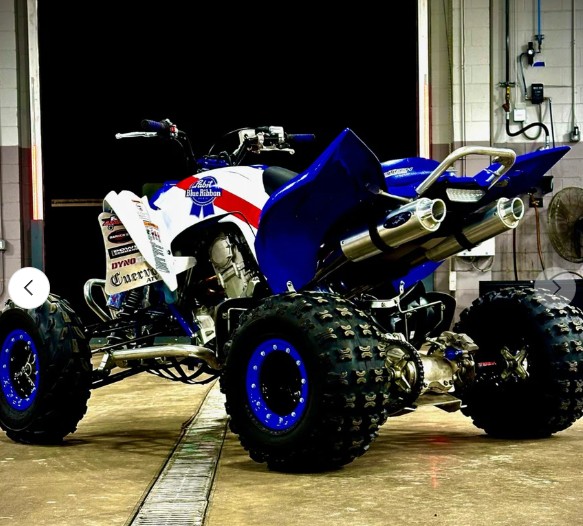
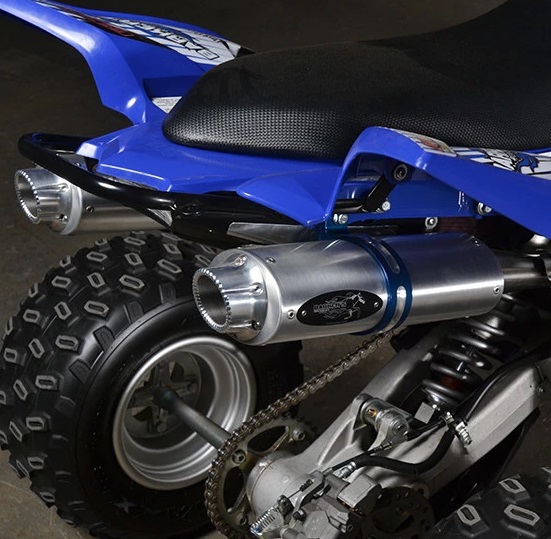
Because Barker’s Exhaust was born on the Raptor platform, Barker’s knew the 2015+ single-port Raptor 700 deserved serious testing. What started as an experiment—building duals for a single-port head—quickly turned into a surprise. After hundreds of dyno pulls, multiple intake configurations, and extensive tuning, one thing became clear: the Raptor 700 truly loves a properly engineered dual exhaust system. The results weren’t just visible on the dyno—they were undeniable on the trail, track, and dunes.
FEATURES:
- 6 to 10+ Horsepower Increase
- 4-10 ft-lbs Torque Increase
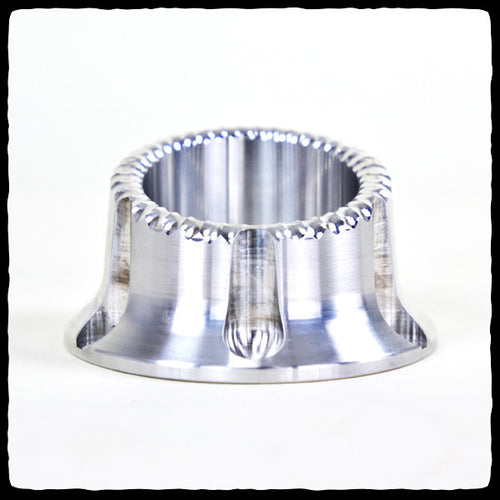
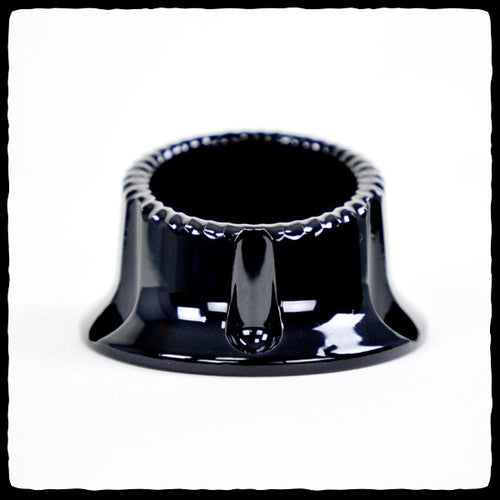
- Choose between a sleek round can or classic oval design
- The dual-can design makes for a slightly quieter system
- The dual-can design also nearly doubles the life of the packing
- Comes Standard with Dual Billet Clamps
- Aluminum Heat Shields to protect your legs!
- Fits 2015 to present Yamaha Raptor 700/R/SE models
The Full Story: Why Barker’s Duals Work on the Raptor 700
Barker’s Exhaust began with the Raptor, so when Yamaha introduced the 2015 model with a single exhaust port Barker’s knew they had to put it to the test—hard. There was plenty of pressure to deliver a set of “Barker’s Duals,” but to be honest, expectations were low. A 1-into-2 dual setup on a single-port head sounded like something that might look cool, but surely wouldn’t outperform a properly tuned single system.
Early testing involved quick dyno pulls across several dual configurations. Not only did the Raptor respond positively, it consistently showed that—even with a single exhaust port—the engine thrived on a well-designed dual system. That initial surprise turned into months of relentless testing.
After hundreds of dyno pulls across multiple raptors and multiple tuners, the data became undeniable.
Stock Intake & AFR Testing
Barker’s started with a completely stock setup—stock airbox, stock intake lid—to understand how the dual exhaust affected air-fuel ratios. What was found was expected but critical:
-
The engine leaned out at idle
-
Several lean spots appeared throughout the RPM range
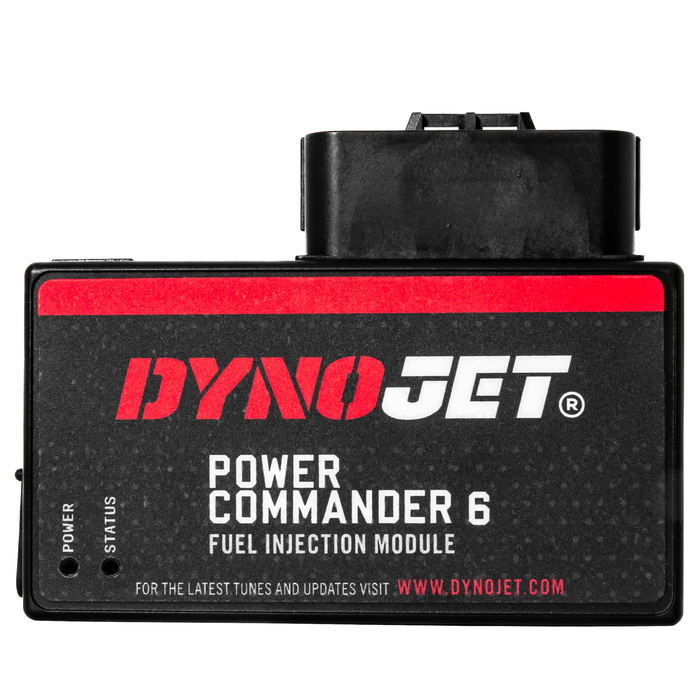
Because of this, its not recommend running the Barker’s Dual system without a fuel controller. Additional fuel is required for the engine to run correctly and safely. This is why the Power Commander 6 is below for easy ordering.
Intake Lid Removal: Where Things Get Serious
Next, Barker’s removed the airbox lid to increase airflow—and that’s when the Raptor really woke up. Removing the lid drastically changes how the engine breathes and requires significant fueling adjustments to maintain the proper Air Fuel Ratio. Once tuned correctly, the gains were immediate and measurable.
With proper tuning like adding the Power Commander 6, the Raptor consistently picked up an additional 2–3 horsepower simply by removing the lid.
Real-World Power Where It Matters
What makes the Barker’s Dual system special isn’t just peak horsepower—it’s where the power shows up.
-
Peak gains range from 3–8 horsepower, depending on intake setup
-
Lower-end torque increases as much as 10 ft-lbs
-
High-RPM gains exceed 10+ horsepower when paired with the FCI intake
Ironically, peak numbers were often the smallest gains on the curve. The real magic happened in the low and mid-range, where the Raptor pulls harder, lugs out of corners stronger, and keeps charging through every gear.
This is one of those setups where the seat-of-the-pants dyno doesn’t lie. The power is immediate, aggressive, and impossible to miss—and yes, you’ll be leaving your buddies in the dust.
The Power Commander 6 fuel injection tuning device allows you to optimize your fuel and timing curve with any aftermarket mods. With fine tune adjustability and multiple inputs, the Power Commander 6 will keep your vehicle running at its full potential.